Veneers and Porcelain Crowns: Which Is Best for Your Needs and What Is the Difference?

Veneers and porcelain crowns are both methods of restorative dentistry to improve the appearance and functionality of your teeth. The most significant difference is that veneers only cover the front surfaces of your teeth, while porcelain crowns cover your entire tooth. Dental restoration procedures are not affordable. It is why you must know which one is best for you.

The procedures for having these restorations are different, but both have successful outcomes. Let us look at the differences between veneers and porcelain crowns, along with the benefits and downsides of both.

What Are the Differences between Veneers and Porcelain Crowns?

Veneers are thin layers of porcelain with a thickness of approximately 1 millimetre bonded to the front surfaces of your existing tooth. Crowns are also fabricated from porcelain but have a thickness of about 2 mm and cover the entire tooth. You can have an all-porcelain crown or even porcelain fused to metal.

Whether your needs are satisfied by a crown or a veneer depends on the condition of your teeth and the problem you are trying to fix. Some common reasons for these restorations are discoloured teeth, decayed or weakened teeth, crooked teeth, chipped, cracked, or broken teeth. Veneers and crowns are both colour-matched to your existing teeth.

What are veneers?

Veneers are surfaces suitable for covering the front surface of your tooth. The procedure for having them is not as invasive as dental crowns because the preparatory process leaves more of your teeth intact.

The dentist in Sunset Hills, MO, removes half a millimetre of enamel from the front of the tooth to roughen the surface before veneer placement. Some varieties of veneers don’t need significant preparation, but if you are having porcelain veneers, you need local anaesthesia because the grinding of your tooth is painful.

The dentist makes impressions of your prepared teeth by digitally scanning them and sending them to a dental lab to customise your placement. You receive a temporary veneer on your tooth for protection until the new arrangement is ready.

You must return to the dentist for a second visit when the dental lab produces the veneer to have the temporary removed and the permanent placement bonded to your tooth. After the surface is attached to your tooth and hardened with ultraviolet light, you experience a minimal movement of the tooth. However, you may need to wear a night guard to protect the veneer if you are affected by bruxism.

What Is a Porcelain Crown?

Porcelain crowns cover the entire tooth, and your existing tooth needs filing down to prepare it for crown placement. The cosmetic dentist in Sunset Hills, MO, removes any decay in your tooth before having the crown fabricated. The crown placement procedure is painful and requires local anaesthesia during the preparation.

Like dental veneers, the dentist takes impressions of your tooth digitally for the dental laboratory to fabricate the crown. You receive a temporary crown to protect your prepared tooth.

When the permanent crown is ready, the dentist removes the temporary and bonds the permanent crown to your tooth. Your crowned tooth may have some movement to change your bite. You may need adjustments to the crown if this occurs.

How to Determine What’s Best for Your Needs?

If your tooth has a large filling, is worn or cracked, or has undergone root canal treatment, a crown is the best option for you.

If your tooth is intact and the restoration is for cosmetic reasons, your needs are better served by veneers.

What Are Their Costs?

Veneers and Porcelain Crowns in Sunset Hills, MO, are both expensive restorations. However, individual prices can vary depending on your tooth’s size, location, and average costs in your geographic area.

Dental insurers don’t cover cosmetic dentistry is or may have a maximum annual limit for coverage.

Veneer prices can range between $ 925-$2500 per tooth, and the figure doesn’t include other procedures that you may need. The costs for crowns vary between $ 1000-$ 3500. Porcelain crowns are more expensive than different varieties.

You can inquire about the prices of veneers and porcelain crowns with the sunset Hills dentist. They may offer you payment plans if you are on a budget to space out your payments and have the restorations on your teeth immediately.

What Does Periodontal Treatment Entail?

Standard procedures involved in periodontal treatment entails scaling and root planing. Scaling entails removing plaque and tartar deposits visible above and below the gum line on the tooth’s root. Dentists use ultrasonic cleaning devices or hand instruments to accomplish the position of scaling.

Root planing is a time-consuming procedure requiring scraping and smoothing the root surfaces of your teeth. Root planing allows your gum tissues to attach firmly to clean and smooth roots. Patients with advanced periodontal disease are advised to quit smoking because it increases the risk of contracting periodontal disease, destroying the tissues in the mouth more rapidly.

In reality, periodontal treatment near you is attention provided by your dental professional to ensure you have healthy gums. The treatment is customised specifically for the severity of your condition.

What Is Periodontal Disease?

Periodontal disease entails the destruction of the bone and gum supporting the teeth. This condition occurs cyclically with bouts of destruction and periods of inactivity.

The general dentist, sunset Hills, MO, aims to remove irritants associated with the disease’s active destruction phase. They also try to maintain your gum tissues to avoid further destruction. You are advised on methods to keep your gums as healthy as possible.

Periodontal treatment succeeds as a combined effort with you as a patient making all efforts to remove daily plaque buildup on your teeth and gum surfaces. If you want to prevent and help heal your inflamed gums, it is incredibly essential for you to inhibit plaque buildup.

The kind of periodontal treatment you require will vary depending on the severity of your gum problem. Various aspects of the treatment and the time needed to complete it successfully are explained by the dentist in Sunset Hills, MO, when you approach them with your condition of advanced periodontitis.

What Is Involved in Periodontal Treatment?

The plan for periodontal treatment considers developing an ordered sequence of dental processes are undertaken by periodontal treatment in Sunset Hills, MO. The program is designed to restore your teeth and gums to their original health.

Oral hygiene inspections and removal of plaque and tartar buildup are usually involved in periodontal treatment. The periodontist may also review your medical conditions, filling replacements, with advice to quit smoking.

The Sunset Hills dentist removes plaque and tartar accumulated in your mouth over a period. The primary reason for the onset of gingivitis or periodontitis is plaque, a sticky and colourless film of bacteria building up on the teeth continuously. Tartar is a hardened plaque allowed to remain on the teeth because it is challenging to remove by brushing and flossing.

When Do You Require Periodontal Treatment?

Periodontal treatment becomes essential when you ignore six-monthly dental visits and allow plaque buildup to harden into tartar. While plaque is comfortably removable by brushing twice a day, tartar is an entirely different issue. When you let the hardening of plaque into tartar, you need help from a dentist for the removal and must undergo the procedure of scaling and root planing. It is why dentists suggest not to ignore six-monthly dental visits to ensure you don’t contact periodontal disease, an incurable condition that requires continuous maintenance.

When ignoring six-monthly dental visits, you may never have assumed that periodontal disease will make it essential for you to visit the Sunset Hills dentist more frequently to maintain this condition. You have to visit the dentist every three months for periodontal maintenance for an unlimited period until the dentist confirms your gums are in a better position.

Is There a Need for More Intensive Treatments for Periodontal Disease?

If your periodontal disease is advanced or severe, the dentist may recommend periodontal surgery providing information on how you will benefit from the procedure. Usually, conservative treatments are sufficient if your periodontal disease hasn’t advanced and detected in the early stages.

If you are recommended surgery for periodontal disease, you must prepare yourself physically and financially for the procedure. You even require sufficient time to recover depending on the type of procedure the dentist performs on you. Periodontal surgery costs can vary between $ 500-$ 10,000 depending on the severity of your condition. If you don’t have dental insurance, you can consider setting up a payment plan with your dentist because prolonging the treatment only exposes you to more complicated and expensive treatments in the future.

Maintaining healthy gums is essential for your overall well-being. Undergoing periodontal treatment, either conservative or advanced, can lower your chances of tooth loss and additional gum damage. The treatment can also keep you away from other health problems requiring expensive treatments.

Family Dentistry FAQs

Scheduling time for your dental care is important, but oftentimes, it tends to get the back seat. Now, trying to have every member of your family visiting a different dentist for assessment is even more challenging. That is why family dentistry comes in so handy. Family dentists can offer the convenience that you want. In this post, we answer some of the common questions of family dentistry.

What is Family Dentistry?

Family dentists are practitioners who handle dental problems of patients of all ages, from kids to seniors. They offer different treatments that are geared to support your teeth and maintain your dental health.

Although they are often confused as general dentists, not all general dentists are family dentists. Most family dentists have a training of the various dental needs of people in different age groups. They also have experience in children’s dentistry, though not as specialized as the pediatric ones.

What are the Benefits of Having a Family Dentist?

A family dentist offers great benefits such as:

    1. Convenience

For most people, time is usually the challenge of visiting the dentist for an assessment. However, with a family dentist, you can schedule an appointment for all your family members. Furthermore, you can choose to visit the clinic on Saturdays if you have a busy schedule. Family dentists offer convenience and also saves you time.

    1. Builds Trust

Having one dentist for your family creates trust and confidence. Plus, you will have all your dental history records in one place for easy access. This makes it easy for the dentist to consult with other dental specialists if need be.

    1. Creates a strong foundation for your children

Visiting the dentist with your children helps them understand the importance of having dental checkups. This will lay a strong foundation for the future and also help them pay attention to their dental health.

    1. Save money

Visiting your family dentist together will reduce the cost of assessment and treatment. Most dental clinics have discounts for families that you can make use of.

What Types of Services Do Family Dentists Offer?

Family dentists offer a range of services that include:

    1. Dental exams and cleaning

It is recommended that you visit a dentist every six months for examination and cleaning. Dental checkups help the dentist to detect any dental problems early. Remember, most dental problems develop without symptoms, and only early detection can stop their progression.

Professional cleaning, on the other hand, removes the plaque buildup from beneath the gum line. This will prevent gum disease and tooth decay.

    1. Preventive dental services

It is easy to prevent dental problems than to treat them. Some of the preventive dental treatments that you can get include:

      • Fluoride treatments. Fluoride is a cavity fighter and also strengthens the enamel. The minerals help in the reabsorption of the essential enamel that hardens the enamel and makes it less prone to decay and damage. Fluoride treatment can benefit all, but it is mostly recommended for people at risk of dental decay.
      • Dental sealants. These are plastic coatings painted on the teeth surface to shield them from bacterial attack. Sealants are ideal for children, but adults with healthy teeth, free of dental fillings can also benefit. The coatings last for a decade.
      • Pediatric dental crowns. They are similar to sealants, only that they are applied to the primary teeth to protect them from decay. The crowns fall out with the primary teeth.
    1. Decay and cavity treatments

For mild dental decay, the teeth fillings provide the best solution. The dentist will remove the cavity and cover the teeth with a filling.

Root canal treatment is done when the decay is severe and has extended to the pulp cavity. If there is severe damage to the teeth, the dentist will recommend a tooth extraction.

    1. Emergency dental services

Since dental accidents occur at any time, we have an emergency dentist in Sunset Hills that can help relieve the pain and prevent complications.

Schedule an Appointment

Visit My STL Dentist for more information on our family dentistry services and how they can benefit you.

Dentistry in Affton providing general and cosmetic dental treatments simultaneously

What would be the situation if you needed treatment from a general dentist for a cracked tooth, and your spouse wants some cosmetic enhancements to their smile. You undoubtedly would begin searching for different dental offices, one for yourself and one for your spouse. In such cases, wouldn’t you find it convenient if you could avail of general and cosmetic dental treatments simultaneously by scheduling just one dental appointment? We are confident you will heave a sigh of relief when informed you can indeed get both treatments required from the experienced dentist in Affton, MO, saving you time and the trouble of driving around town or searching for parking spaces.

People frequently avoid dental visits; merely because it is inconvenient to drive around town besides their dental anxiety, which haunts them forever. Until this moment, it was challenging to discover dentists offering multiple treatments simultaneously in one practice. Fortunately for you, competition among general dentists has made the Affton dentist realize it is time to provide patients more than just general dentistry. They have included cosmetic dentistry treatments with their offerings and have begun attracting a clientele that wants more treatments covered in one dental visit.

What Services Are Provided by General Dentistry in Affton?

Whether you want dental cleanings or exams or have your cracked tooth repaired, rest assured the general dentist provides both treatments in one convenient appointment. The broken tooth is x-rayed to determine the extent of the damage. After deciding the injury, the dentist seals the cracked tooth with a tooth-colored filling from composite resin. The resin prevents bacteria from penetrating the cracks and attacking your tooth’s pulp.

General dentists provide a wide range of treatments you may need for any member of your family or yourself. You can contact general dentists whenever you need any treatments related to your oral health. Undergoing an examination from a general dentist for preventive dentistry allows you to have a grip on your overall health. Besides providing preventive dental treatments and advice, general dentists also examine you for oral cancer by looking for signs of abnormal growth in your mouth. Dental x-rays allow general dentists to detect any issues affecting your mouth early to advise treatment options that prove beneficial.

How Can General Dentists Provide Cosmetic Dentistry Services?

Cosmetic dentistry is not a specialty in the dental field, and any qualified dental professional provides these treatments. Cosmetic dentistry merely attempts to enhance the smile of an individual while also caring for their oral health. Therefore you mustn’t be bothered by any concerns if your general dentists also provide cosmetic treatments for your spouse.

If your spouse needs teeth whitening treatments for stain removal on their teeth, the dentist provides in-office bleaching treatments to improve the color of their teeth by three to eight shades. Should your spouse need treatments to make their teeth appear more even, the dentist provides dental bonding in one convenient appointment at their office. The benefits of visiting the Affton dentist will be apparent to you when you step into their offices.

Dentists Providing Multiple Treatments Must Be Expensive, Isn’t It?

Dental treatments are not affordable, and most dentists tend to charge higher prices according to their specific specialization. However, if you visit a general dentist also providing cosmetic dentistry, it doesn’t mean you have to pay higher fees for any treatments they provide. You may come across a situation where a teenager in your family needs teeth straightening but is reluctant to wear orthodontic braces. In such instances, the general dentist providing cosmetic treatments can offer the teenager a suitable alternative to straighten teeth without a mouth full of metal. Your family member will have straighter teeth from a general cosmetic dentist instead of visiting an orthodontist paying exorbitant prices.

General dentists now make arrangements for the management of dental insurance and financials within their practice. You can confidently visit the dentistry practice discussed if you have dental insurance or need a payment plan to manage your finances. Dentistry in Affton provides all the convenience required by patients while offering treatments from different specialties under one roof. You don’t need to schedule multiple appointments or drive around to various specialists because every family member has an additional requirement. You can go down to this practice with confidence that you will have all treatments cared for in one place.

w

Will Your Dental Bridges Require Special Attention?

Bridging the gap caused by missing teeth undoubtedly restored your smile and enhanced your appearance. Dental bridges are excellent solutions to accomplish this task efficiently. Now that you have your beautiful smile back, you may want to display it to everyone around you.

Have you stopped for a moment to consider how you will diligently take care of your smile? If you haven’t, it is time you began doing so right away. You may already have excellent oral hygiene habits but may have lost a tooth or teeth for different reasons. Regardless of how you lost your teeth, you need to ensure you care for them appropriately by following the suggestions mentioned below.

Your Dental Bridges Need Special Attention

We assume you practice good oral hygiene habits. However, to maintain the dental bridge in a viable condition, it is incredibly essential for you to continue maintaining excellent oral hygiene. The dentist sunset Hills, MO, may have advised you of the appropriate procedures for keeping your dental bridge clean besides the area around it healthy. The dentist also provides information on the tools you must use for cleaning your bridge.

Mere Brushing and Flossing Insufficient for Maintaining Dental Bridges

You must continue brushing and flossing your teeth as you usually do without fail. Furthermore, you must indulge in some extra flossing beneath and around your dental bridge to prevent plaque buildup. This additional step in your oral hygiene routine will keep the gums underneath the bridge healthy and the supporting teeth on which the bridge sits devoid of plaque, which causes gingivitis.

You may have to search around for inter-dental flossers to accomplish this task. You can also request flossing demonstrations from dentist Fenton, MO, to understand how you can use these tools. The lessons will not be challenging to come by if you are visiting your dentist for regular exams and cleanings.

Susceptible Areas

Are you wondering why brushing and flossing alone is insufficient to maintain your dental bridges? Chances are you are likely to miss areas on both the supporting teeth of the bridge. The sides of the teeth facing the bridge are susceptible to plaque buildup. Food can get trapped under the pontics, and food debris with bacteria is an open invitation for plaque buildup around the gum line on the teeth in these locations. Gingivitis or cavities can begin to develop if these areas are not cleaned carefully.

Regular Dental Visits for Dental Bridge Health

Dental Bridge Sunset Hills, MO, recommends regular dental visits to maintain the health of your dental bridges besides your oral health. The cosmetic dentist, sunset Hills, MO, check the area around the dental bridge to ensure it is healthy.

Professional cleanings ensure plaque buildup does not develop. Dental hygienists have special instruments to remove plaque from hard to reach areas. When you maintain excellent home care and complement the same with regular professional cleanings, your dental bridge will last you for the duration promised by the dentist.

Professional Tips to Maintain Dental Bridges

Brush Your Teeth Twice a Day

Plaque deposits and tartar don’t require much time to accumulate around the teeth and along the gum line. It will help if you brush twice a day using a soft-bristled toothbrush and fluoride toothpaste. The brushing will help remove irritants to keep your oral bacteria at healthy levels. Do not consider whitening pastes because they are harsh and can damage the bridge.

Daily Flossing

Your neighboring natural teeth support the entire bridge. You risk losing the restoration if the supporting teeth are compromised. Therefore it is incredibly essential for you to care for them correctly. Clean between all your natural teeth at least once a day to reduce the risk of tooth decay and gingivitis.

Cleaning beneath the Bridge

Cleaning underneath the bridge is a habit you must inculcate every day. After you have finished your brushing and flossing, you must remove food particles and debris from the spaces between your bridge and the gums. You can accomplish this task using dental picks or inter-proximal brushes. Your dentist can provide product recommendations to help you.

Routine Exams and Cleanings

Everyone needs routine exams and cleanings. However, when you have dental restorations of any kind or a dental bridge, these practices assume more significance. Twice yearly visits are beneficial for most patients. However, if you have a history of dental issues like tooth decay or gum disease, your dentist recommends frequent appointments.

After having dental bridges to restore your smile, it would be a gross injustice if you didn’t care for them appropriately by following the suggestions mentioned in this article.

Dental bridges are excellent restorations to replace missing teeth. However, if you have them, you must understand they need special care if you intend to keep them for a long time.

Dental Bridges 101: All You Need to Know Before Getting Them

Missing teeth affect only your smile and also dental structure. The jawbone needs stimulation from the teeth. However, when your permanent teeth are removed, they leave unsightly gaps and gums exposed. Without the presence of the teeth, the alveolar bone begins to deteriorate. Furthermore, the surrounding teeth will shift to the available spaces, which further weakens the bone. Having your teeth replaced can improve your smile as well as preserve your dental integrity.

Fortunately, we have several dental treatments to help you restore your teeth, such as dental bridges in Sunset Hills, MO.

What Are Dental Bridges?

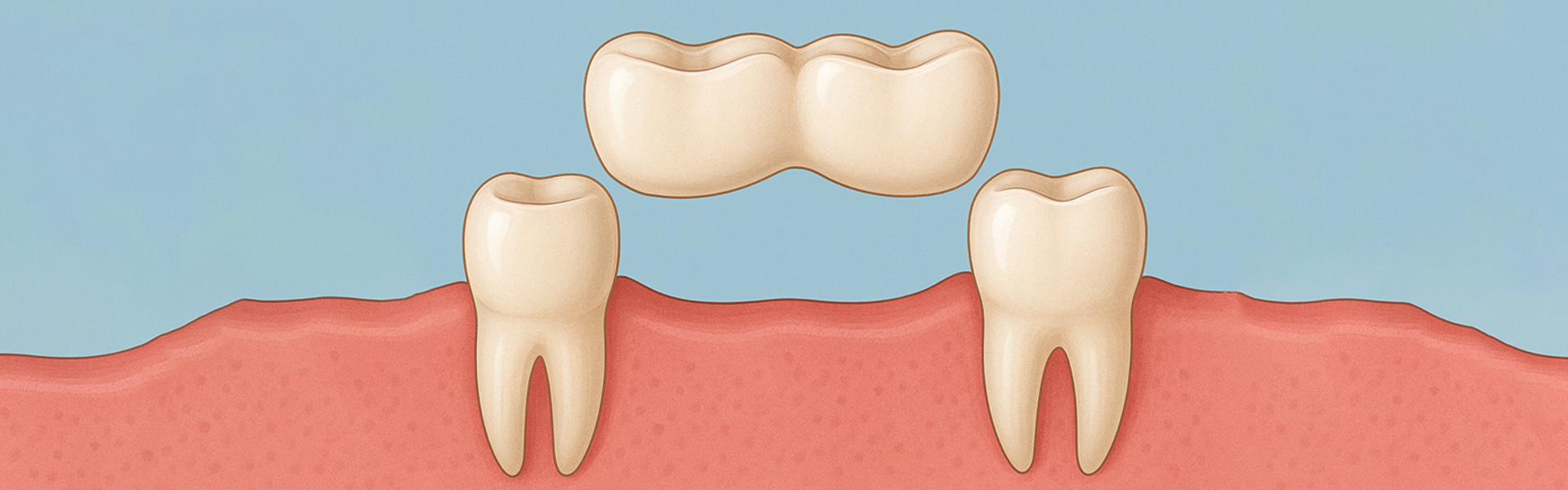
Dental bridges are false teeth that are cemented onto the existing teeth or implants to close the gaps. These fixtures are made of two crowns that anchor the false teeth. For the dental bridges to be fixed, your surrounding teeth need to be healthy.

We have several types of dental bridges that you can choose from:

  • Traditional bridges. These are the commonly used bridges and are made of two crowns fixed on adjacent teeth. These bridges are either made of ceramic or porcelain-fused-to-metal.
  • Cantilever bridges. They are similar to the traditional ones, but instead of two teeth, the bridge is supported by one. These bridges are not strong and are only ideal for the front teeth.
  • Maryland bridges. These bridges also use two teeth for support. However, instead of the dental crowns, the bridge uses a metal or porcelain framework to anchor the false teeth.

There is also the implant-supported bridges that use implants. These metal screws are surgically fixed in the jawbone. You will need several dental visits for the implants to be fixed. Consult our cosmetic dentistry in Sunset Hills, MO, for more information about the types of bridges and their benefits.

Why Get a Dental Bridge?

Dental bridges offer several benefits:

  • The process of fixing the bridges is not time-consuming or invasive compared to the implants.
  • It restores your smile and maintains your facial structure
  • It preserves your dental integrity by preventing the teeth from shifting
  • The bridges distribute the bite pressure evenly

How Are the Bridges Fixed?

Fixing the dental bridge requires at least two dental visits, and the process involves a few steps:

  • Diagnosing and planning

The dentist will first do a comprehensive dental assessment to check if there is any bone loss and also discuss the different types of bridges.

We will also discuss the treatment procedure, what to expect during and after the bridges are fixed.

  • Preparation

The teeth need reshaping before the bridges are fixed. Our dentist in 63127 will trim off part of your enamel to make room for the dental crowns. This process is irreversible and the primary disadvantage of the traditional bridges.

The dentist will take a mold of your teeth to make the permanent bridges. The process of making the bridges take about three weeks, so as you wait, the dentist will fix a temporary bridge to protect your teeth.

  • Fixing of the bridges

On your second dental visit, the temporary bridges are removed and replaced with permanent ones. You may need an additional dental visit to check the fit of the bridges.

After the bridges are fixed, you may feel pressure and mild irritation. Also, your speech may be affected in the first few days. These problems will clear as your gums and tongue get used to the bridges.

How Long Do the Bridges Last?

Dental bridges are durable and can last between 10 and 15 years with proper care. There are no special dental instructions for taking care of the bridges, other than your standard hygiene practices.

Though the bridges do not affect your eating habits, it vital to limit the consumption of red wine, coffee, tea, or brush your teeth when you take them. These beverages can stain your bridges, causing them to discolor. Once they stain, you need to have the bridges replaced because the shade cannot be altered.

Finally, visit My STL Dentist in Sunset Hills for a routine checkup and cleaning every six months.

Comprehensive Understanding of Porcelain Veneers

Are your teeth stained, discolored, chipped, or cracked? Such dental problems can affect the way you look and sometimes lead to loss of confidence. However, with dental restorative and cosmetic options such as veneers, you can improve your smile as well as your bite.

Your dentist bonds the porcelain sheets in front of your teeth, changing their color, shape, and size. Also, if you want a permanent teeth whitening option, porcelain veneers would be a good one since the material is stain-resistant.

Which Dental Problems Do Porcelain Veneers Fix?

You can consider porcelain dental veneers if you have the following:

  • Worn-down tooth
  • A chipped or cracked tooth
  • Irregularly-shaped or misaligned teeth
  • Teeth with gaps between them

You might also consider dental veneers if your teeth are discolored due to tetracycline stains, root canal treatments, large-resin fillings, or excessive fluoride.

Porcelain Veneers Placement Procedure

When getting a dental veneer, you will need three visits to your dentist. One appointment involves consultation, while the other two are for making and applying the porcelain veneers. Despite the number of teeth that need porcelain veneers, your Sunset Hills dentist can place all of them in one day.

Examination and Treatment Planning

During the first appointment, your dentist will ask you about the results you want to achieve. The dentist will then proceed by examining your teeth to ensure dental veneers are the best option for you. Also, your dentist can educate you on the limitations of getting porcelain veneers to ensure you make the right decision.

The dentist might take digital x-rays and impressions of your teeth to help in the creation of your veneers.

Preparation

When preparing for your veneers, your dentist will reshape your teeth’s surfaces, which equally amount to the sizes of porcelain veneers you are about to get. During the procedure, your dentist can numb the area or not, depending on your needs.

Next, the dentist will make a model of your teeth and send it to a dental lab to help to create your veneers. The porcelain veneers will take two weeks to come back. Therefore, in the meantime, your dentist will place temporary veneers.

Bonding the Porcelain Veneers

During the third appointment, your dentist will place your porcelain veneers to examine fit and color. The dentist will then trim and reshape the porcelain veneers to ensure they fit, before bonding them. If the shade of your porcelain veneers doesn’t match that of your natural teeth, the dentist can make color adjustments using the bonding material.

Before cementing the veneer into place, the dentist can etch and clean your tooth. Etching will roughen your tooth, thus allows a strong bonding process. Your dentist will then place your porcelain veneers and apply the bonding material. To harden the cementing material, at My STL Dentist, we shine a blue light over it to activate the chemicals.

The final step of the procedure involves removing any excess cement, checking your bite, and making necessary adjustments.

What Is the Lifespan of Porcelain Veneers?

With proper care, your porcelain veneers can last up to 20 years before the need for a replacement. In case your porcelain veneer is damaged, you should get a replacement early since you can be at risk of root canal treatments.

Benefits

Porcelain veneers offer the following benefits:

  • Your dentist can choose a shade that matches your natural tooth color, thus enhancing aesthetics
  • Gums are tolerant to the porcelain veneers
  • Porcelain material is stain resistant hence provides lasting teeth whitening effects
  • Do not require much shaping of the teeth

Limitations

Some of the drawbacks of porcelain veneers include:

  • Porcelain veneers can not be repaired when damaged
  • With veneers, you can still experience tooth decay
  • Dental veneers are a good option for people with tooth decay or gum disease
  • Porcelain veneers can crack chip, especially if you clench or grind your teeth

Taking Care of Your Porcelain Veneers

Porcelain veneers don’t require any specialized care. However, to maintain the results, you should take care of the porcelain veneers. Below are the ways:

  • Brushing at least twice a day
  • Flossing once daily
  • Regular dental cleanings and examinations
  • Avoid smoking or using any tobacco products
  • Use protective mouthguards when playing contact sports to prevent cracking or chipping of the porcelain veneers
  • Do not clench and grind your teeth or bite down on hard objects

Sunset Hills Dentist Services for You

Do you know a dentist near you? If so! Do you know the services the dentist provides? Some dentists provide general dental services while others offer specific services. The one who provides general dental services is known as a general dentist. Most likely, your family dentist is a general dentist.

General dentists provide primary oral care services for people of all ages. However, a dentist can still render general dentistry services but only for kids. In such a case, the dentist is known as a pediatric dentist. Also, others provide cosmetic dental services. Such dentists are known as cosmetic dentists.

In dental clinics, you might find a dentist that provides all of the services above or a group with each dentist providing specific dental services. At My STL Dental, our dentist offers the following dental services.

Family Dentistry

Having a family dentist is very significant since you will always have a consultant, even in the case of an emergency.

Our family dentist in Sunset Hills provides several services. These services include:

Preventive Care

Ideally, what our general or family dentists offer is preventive dental care. With your oral health in our minds, we enlighten you on how to take care of your teeth. Other than educating you, our dentist performs some procedures that aim to prevent complications.

Some of the preventive dental procedures include:

  • Dental exams and professional cleanings
  • Dental fillings
  • Tooth extractions
  • Fluoride treatments

Each of the procedures above prevents complications that may arise in your mouth. We encourage patients to visit a dentist at least twice a year for check-ups. During the visit, the dentist might identify potential problems and recommend treatment immediately, thus preventing further complications.

Restorative Care

Other than preventive dental care, family or general dentists perform restorative dental procedures. Restorative dental procedures aim to replace the functionality, size, and shape of your teeth.

Factors that may lead to the need for restorative dental care include: knocked-out teeth, chipped, broken, cracked enamels, or lost crowns. When you need restoration for your teeth, our dentist will design your treatment depending on your condition.

Some of the dental restorative options include:

  • Dental implants
  • Dentures
  • Crowns

Cosmetic Dentistry

In our dental clinic, we offer cosmetic dental care. Cosmetic dentistry involves procedures that aim to enhance your appearance. Sometimes our teeth might be discolored, stained, misshapen, or even gapped. In the above situations, you are likely to lose your smile and self-confidence when talking to people.

Before receiving cosmetic dentistry services in Sunset Hills, you will first have a consultation with the dentist. Your dentist may inquire about your preferences to help them out in designing your treatment plan.

The cosmetic dentistry services in our clinic include:

  • Teeth whitening
  • Dental veneers
  • Tooth bonding
  • Dental crowns
  • Orthodontics

Pediatric Dentistry

General or family dentists can treat even children. However, some dentists specialize in treating children. These dentists receive specialized training after graduating as dental health care providers.

Since every child is different, our pediatric dentist has a wide range of approaches to help each child complete the required dental treatment. The dentist will approach each case depending on the child’s medical history, dental care needs, special health care needs, and the behavior of the child towards treatment.

Since some children resent needles and sometimes visiting a dental clinic, our pediatric dentist in Sunset Hills, MO, might consider sedation dentistry techniques. These techniques will help the child feel relaxed and more comfortable during dental procedures.

Benefits of Knowing a Dentist

Having a family dentist is very significant. Apart from the regular check-ups, the dentist offers other essential services. Also, in case of a dental emergency, you will have a professional to consult on how to respond.

Below are several benefits:

  • You can book appointments that suit your lifestyle
  • Since the family dentist is equipped to accommodate all kinds of patients, you will always know where to go in case your family needs dental care services
  • During regular check-ups, the dentist will identify problems and recommend the appropriate treatment
  • Preventive care during check-ups and dental cleanings
  • Your family dentist provides dental health education thus helping you in preventing dental problems
  • Also, you will always know where to go in case you need a dental treatment

How Do Dentists and Orthodontists Differ in Their Professions?

Orthodontists and dentists are both dental professionals helping patients to improve their oral health, but their professions differ. The term dentistry is a comprehensive medical specialty dealing with the teeth, gums, nerves, and jaw. Orthodontic services focus on correcting bites, malocclusion, and straightening the teeth. The orthodontist sunset Hill, MO, is also a dentist, but the cosmetic dentist in Sunset Hill, MO, isn’t a licensed orthodontist.

What Are the Similarities between Both Professionals?

Orthodontists and dentists both focus on oral care, which is their primary responsibility. An orthodontist may practice in a dental office to provide the same care as dentists. Orthodontic professionals continue educating themselves after completing four years of dental school in an accredited university, focusing only on tooth and jaw alignment. Both professionals strive to achieve beautiful smiles for their patients with dentists focusing on covering a wide range of dental issues, including cavities, gum disease, missing and broken teeth.

Both professionals play an invaluable role in keeping your teeth healthy and appearing great. However, patients must understand that a general dentist offering orthodontic treatment is not qualified in the field of orthodontics as an orthodontist. The profession of dentistry has different divisions for professionals that want to specialize in a particular area.

Both professionals play an invaluable role in keeping your teeth healthy and appearing great. However, patients must understand that a general dentist offering orthodontic treatment is not qualified in the field of orthodontics as an orthodontist. The profession of dentistry has different divisions for professionals that want to specialize in a particular area.

How Do These Professionals Differ from Each Other?

More differences exist between the two than similarities. As mentioned earlier, an orthodontist requires additional education in the chosen dental specialty, and the situation is the same as a doctor who strives to attain further knowledge to become a surgeon. Orthodontists specialize in helping patients who have alignment issues with their teeth. Their treatments help patients to improve their bite by fitting them with corrective braces or other appliances. When patients approach dentists with overbites, they are referred to an orthodontist for correcting the issue.

Dentists are focusing on encouraging excellent oral hygiene and provide services related to tooth decay, gum disease, root canals, dental crowns, bridges, teeth whitening, and dental veneers. Orthodontists are dentists as well, but they specialize in aligning the teeth and providing services related to crowded teeth, underbites, overbites, and misaligned teeth.

What Helped Can an Orthodontist Offer?

The orthodontist near 63127 can help with crooked teeth, but they can also assist patients with other issues. Orthodontists can help patients with crossbites, gaps between their teeth, overcrowding, and temporomandibular disorders, or other problems of the jaw.

Dentists receive training to provide orthodontic care besides extractions, TMJ treatments, and fillings, but entrusting your smile to an orthodontist can balance the different procedures you have. Orthodontists are specialists in facial growth and dental development, and with the proper intervention at an early age reduces the need for orthodontic treatments by providing better results.

As specialists in tooth and jaw, alignment orthodontists offer different types of treatment, including traditional braces, retainers, clear aligners, and also help you to make a choice appropriately. Dentists generally only provide one type or brand of aligners or braces.

All patients must understand the differences between both professionals because it helps them to choose an appropriate professional whenever they are affected by a dental issue of any kind. Misconceptions existed earlier that orthodontists can only offer treatments with braces for children and teenagers. With the passage of time and the realization that a smile has a significant role to play even during adulthood, more people now prefer to undergo orthodontic treatment for medical or cosmetic reasons. Their sole aim is to improve their appearance and smile by correcting the problems with the teeth for which the orthodontist is a qualified professional.

This blog is not to deride dentists who are also offering orthodontic treatments to children and adults but is to clarify that differences exist between the two professions. People with dental issues like discoloration chipped and broken teeth, or toothaches will do better to visit a dentist who handles these issues frequently. Similarly, people that want to correct the imperfections with their teeth for purposes of appearance or cosmetic reasons will improve their chances of succeeding with the treatment when they approach an orthodontist. Dental professionals specializing as orthodontists can also perform extractions and other routine dental procedures but often stick to their chosen field preferring instead to concentrate on orthodontics.

The 5 Common Types of Dental Bridges

A bridge is an effective solution to people who have a tooth missing or a wide gap that causes their teeth to loosen. Missing teeth will create gaps that will bring discomfort to your jaw and cause you pain when you chew.

What is a Bridge?

Dental bridges are pontics, also known as false teeth that are held in position by anchoring teeth which are also referred to as abutment teeth. In collaboration, these two will cover the gaps in your mouth. Natural teeth and dental implants are the supporting structures for bridges.

Bridges are used to restore smiles and peoples’ ability to speak and chew properly. By acting as teeth replacements, dental bridges will redistribute your bite forces and prevent your other teeth from moving out of place.

If you are thinking of going for bridges, visit My STL Dentist clinic and fill the gap in your smile.

Who Needs It?

You will need a dental bridge if:

  • One of your teeth falls out or is extracted by the dentist due to extensive decay.
  • You get involved in an accident, and your tooth gets damaged beyond repair.
  • Your infection or decay is way deep within your tooth such that neither root canal nor a filling is sufficient.

The 5 Main Types of Dental Bridges

    1. Traditional Bridges

Among all other types of bridges, traditional bridges are the most commonly used. This is because they are small and lightweight. When you lose your teeth, your bite force gets compromised.
Traditional bridges will redistribute those forces giving you the best chewing comfort. The bridge will last for a long period of time if you observe your hygiene and give it proper maintenance care.
During the installation procedure, enamel from the anchoring teeth will be cut to create room for crowns. This is the major drawback of these bridges as the enamel won’t regenerate itself. This means that the supporting teeth will always have to be fitted with crowns for protection.

    1. Maryland Bridges

Maryland bridges are known for their conservative nature. It consists of fake teeth held in position by a porcelain framework or a metal. For this procedure to begin, there have to be at least two adjacent teeth to the tooth that’s missing where the framework will be bonded onto. One advantage of these bridges is that no teeth filing will be done because it’s not the crowns that will hold the bridge in place.

The strength of Maryland bridges is limited and cannot withstand subjection to a lot of force. Thus, they cannot be used to replace molars and premolars as they are likely to drift out of their position. At times, your bite may be affected by the framework.

    1. Implant-Supported Bridges

This is another option available for the replacement of missing teeth. Dental implants are used to support these bridges, and for every tooth that is missing, an implant will be placed at the gap of the missing tooth. The series of dental implants positioned, offer support for the bridge. If this is not possible, implant-supported crowns are used to suspend the fake tooth which is then positioned.

Implant-supported bridges are gaining popularity because they are easy to clean and maintain, and they feel more comfortable and secure, just like your former natural teeth.

One disadvantage of these bridges is that you will have to visit the dentist twice before the bridges are placed. During the first visit, the implants will be placed while the bridges await your next visit.

    1. Composite Bridge

Composite bridges offer an affordable and easy solution to teeth replacement issues. It only takes a day to make and install these bridges at the dentist. It involves recreating the tooth that’s missing with a plastic tooth-filling bonding material. These bridges are considered temporary and are prone to chipping because the composite material that isused to make it is not strong.

    1. Cantilever Bridges

Cantilever bridges are mostly used when only one abutment tooth is available to hold the missing teeth. The bridge is designed for front teeth replacement as there is a less biting force involved. Biting forces have to be considered when designing these bridges in the lab.

COVID-19 Update

©2026 My STL Dentist | Privacy Policy | Web Design, Digital Marketing & SEO By Adit
Click to listen highlighted text!